The Art of Copper Cookware
Experience unparalleled thermal conductivity and timeless elegance with copper cookware from legendary French, Italian, and Belgian artisans.
5x Better Heat
Than iron cookware
Instant Response
Precise temperature control
Heirloom Quality
Lifetime investment
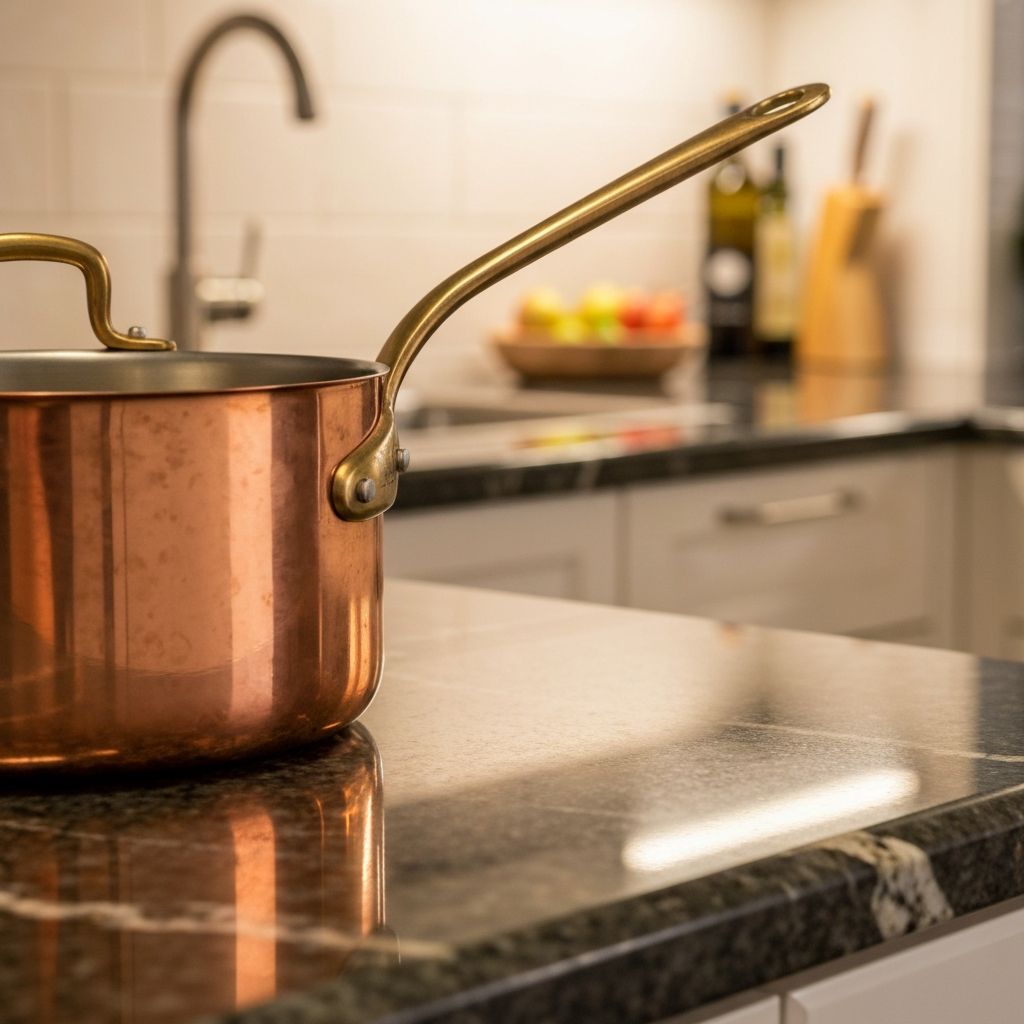
Professional Grade
2026 Collection
Why Copper Cookware?
Copper is the gold standard in professional kitchens worldwide. Discover the science behind the superiority.
Superior Thermal Conductivity
20x FasterCopper conducts heat 20x better than stainless steel, delivering instant responsiveness when you adjust the flame.
Perfect for Delicate Sauces
Chef's ChoicePrevents sauces from breaking and food from scorching. Ideal for Hollandaise, caramel, and chocolate work.
Professional Lining Options
3 OptionsChoose between traditional tin, modern stainless steel, or ultra-luxury silver linings for optimal performance.
Heirloom Craftsmanship
Lifetime Quality2.5mm thick professional-grade copper that prevents warping and lasts generations with proper care.
Why Thermal Conductivity Matters in Professional Cooking
Copper's exceptional thermal conductivity (401 W/m·K) means heat spreads evenly across the entire cooking surface within seconds. This eliminates hot spots that cause uneven cooking, burning, and scorching—giving you precise control that's impossible with other materials.
What this means in practice: When you reduce heat under a copper pan, the entire pan responds instantly. With stainless steel, the pan continues cooking at the previous temperature for much longer, leading to overcooking.

Heat response time
Temperature variance
Faster cooking time
Even heat distribution
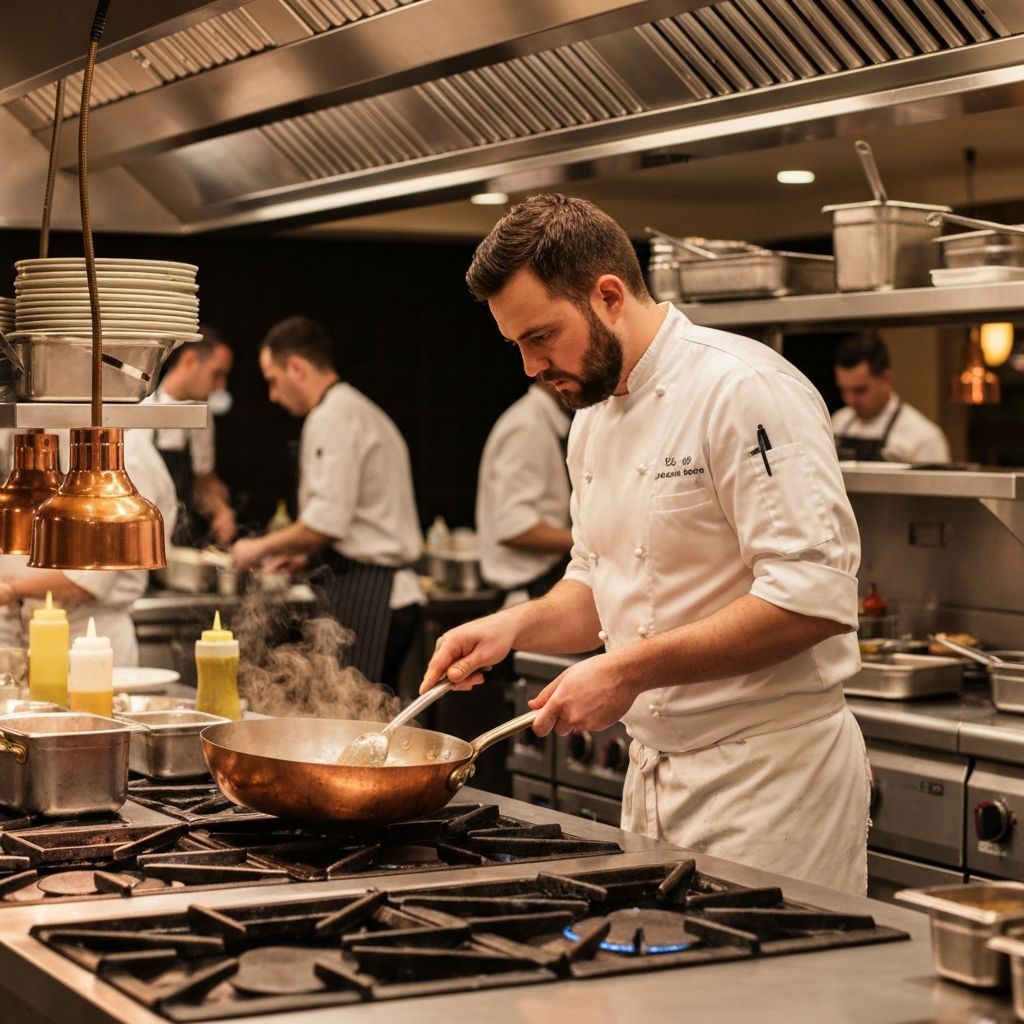
Preferred by
Michelin Chefs
The Science Behind Copper Excellence
Copper cookware has been the professional chef's choice for centuries, and modern science confirms why. With a thermal conductivity of 401 W/mK, copper outperforms all other cookware materials, making it the ultimate tool for precise temperature control.
Molecular Heat Distribution
Copper's atomic structure allows electrons to move freely, transferring thermal energy instantaneously across the entire cooking surface. This eliminates hot spots and ensures even cooking from edge to center.
Instant Temperature Response
When you adjust your burner, copper responds in seconds—not minutes. This responsiveness gives you the control needed for techniques like deglazing, reducing sauces, and achieving perfect caramelization.
Professional Standards
Professional-grade copper cookware features minimum 2.5mm thickness. This substantial gauge prevents warping while maintaining the thermal responsiveness that makes copper legendary in culinary circles.
Legendary European Brands
Three distinct traditions, one shared commitment to excellence in copper craftsmanship.
Mauviel 1830
The gold standard of French copper cookware. Professional M'Heritage 250 series with 2.5mm thickness.
Explore Mauviel 1830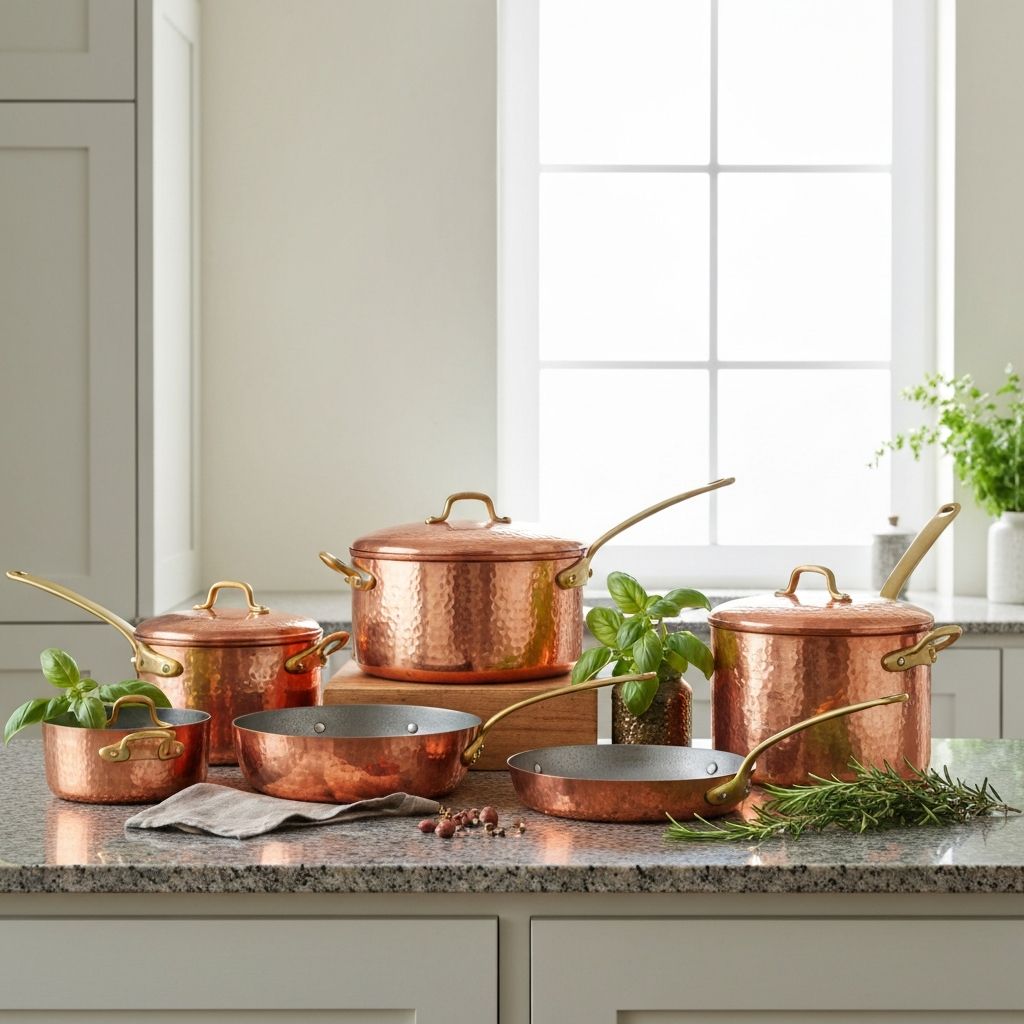
Ruffoni
Hand-hammered Italian artistry with decorative brass finials. Where functionality meets timeless beauty.
Explore Ruffoni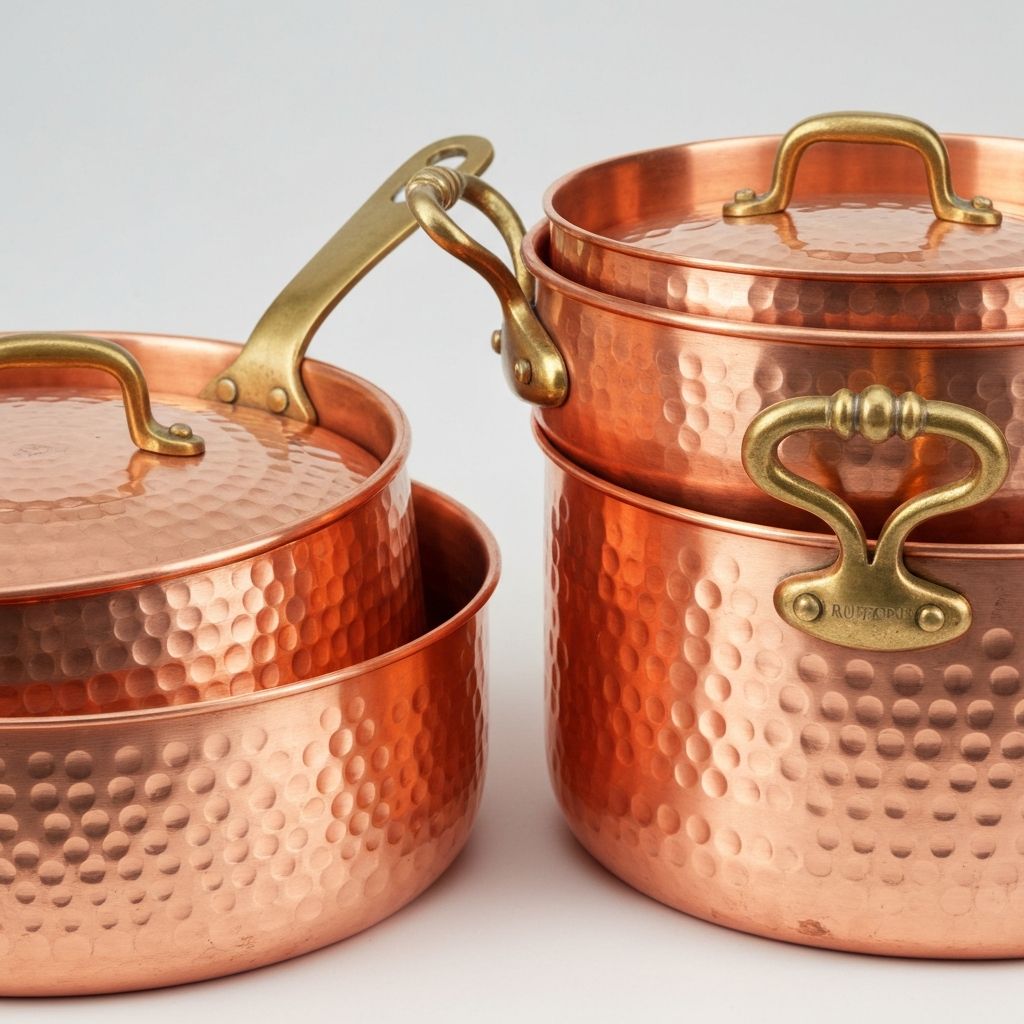
Falk Culinair
Brushed copper-stainless bimetal construction. Low-maintenance excellence for serious home cooks.
Explore Falk Culinair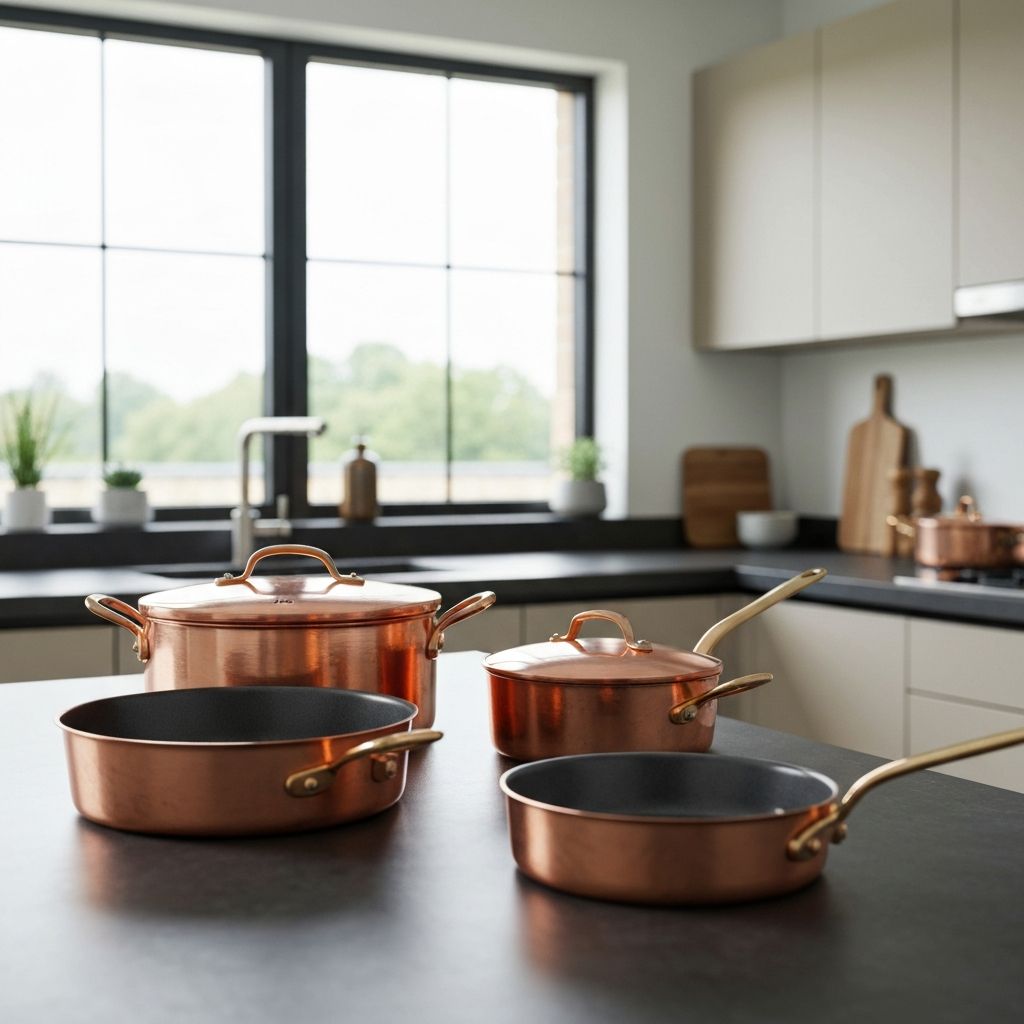
The 4 Essential Copper Pieces Every Kitchen Needs
You don't need a complete set to enjoy copper's benefits. Start with these foundational pieces and build your collection over time as your skills grow.
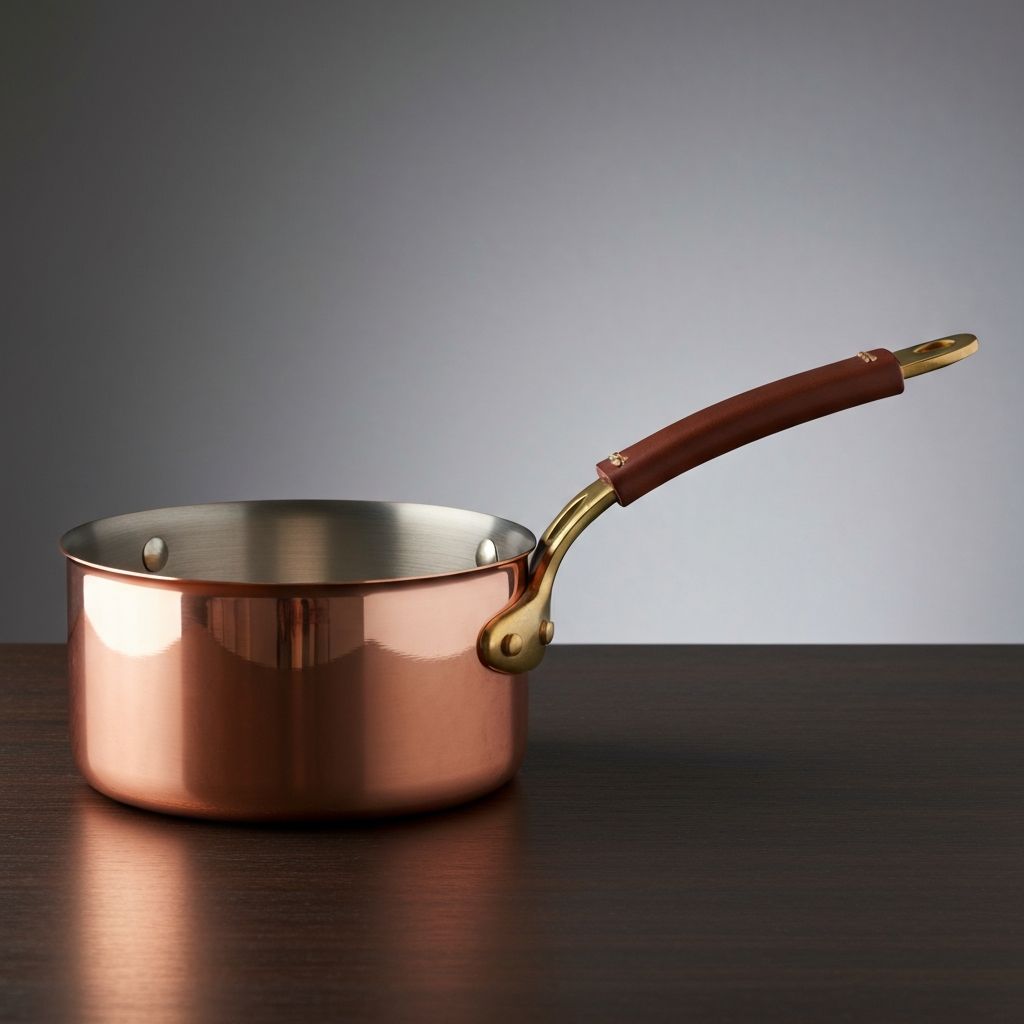
Saucepan (2-3 Qt)
The workhorse of copper cookware. Perfect for sauces, reductions, custards, and anything requiring precise temperature control. Start here if you're buying your first piece.
Best For:
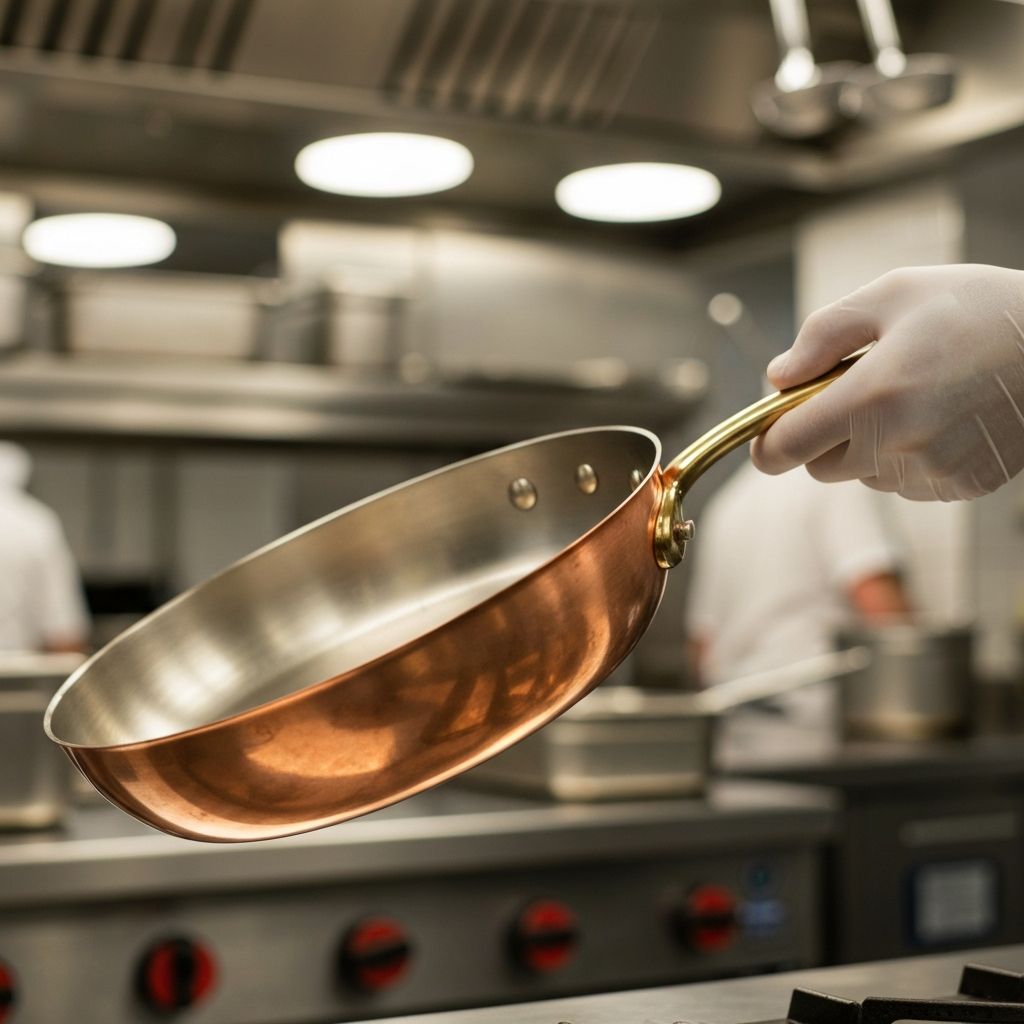
Sauté Pan (3-4 Qt)
With its wide, flat bottom and straight sides, this pan excels at browning, searing, and one-pan meals. The large surface area makes it ideal for cooking proteins with sauce.
Best For:
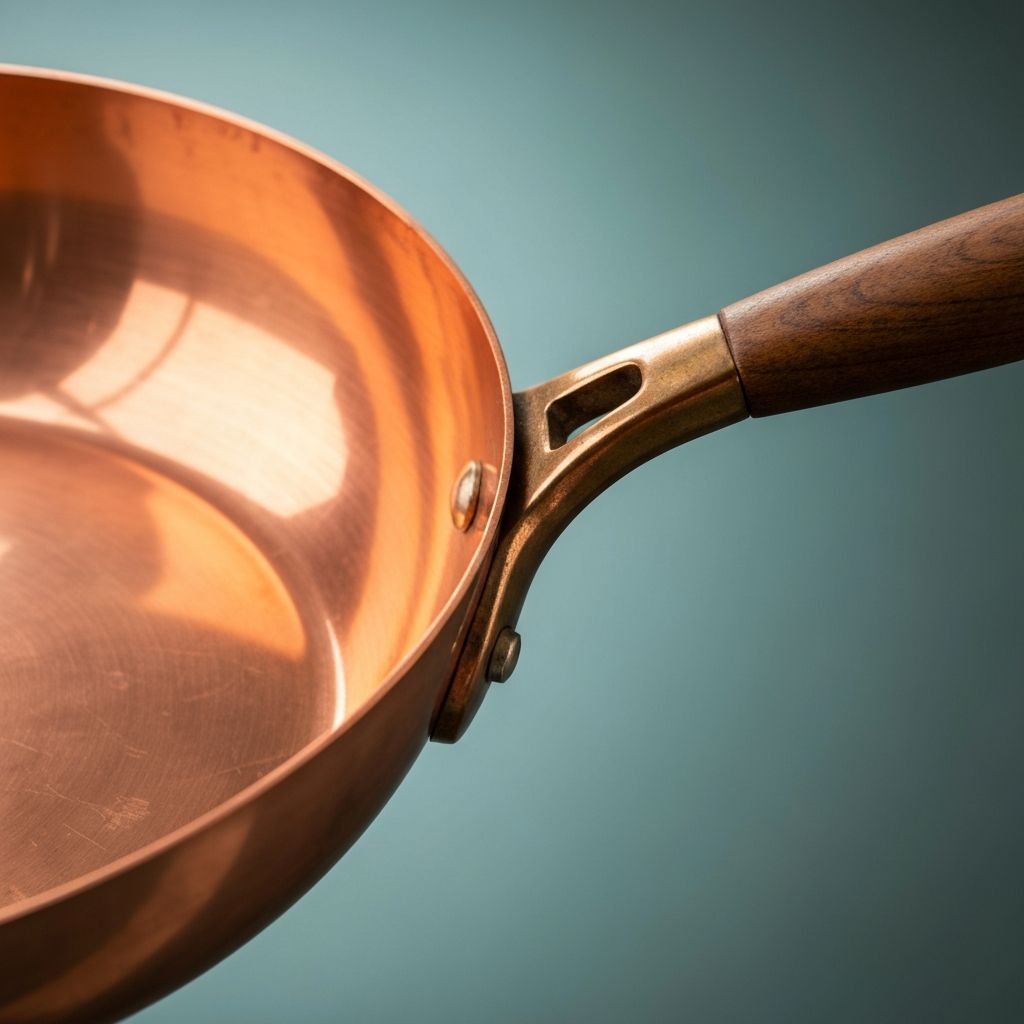
Fry Pan / Skillet (10-12")
The most versatile pan in your collection. From breakfast eggs to dinner steaks, a copper fry pan offers unmatched heat control for everyday cooking.
Best For:
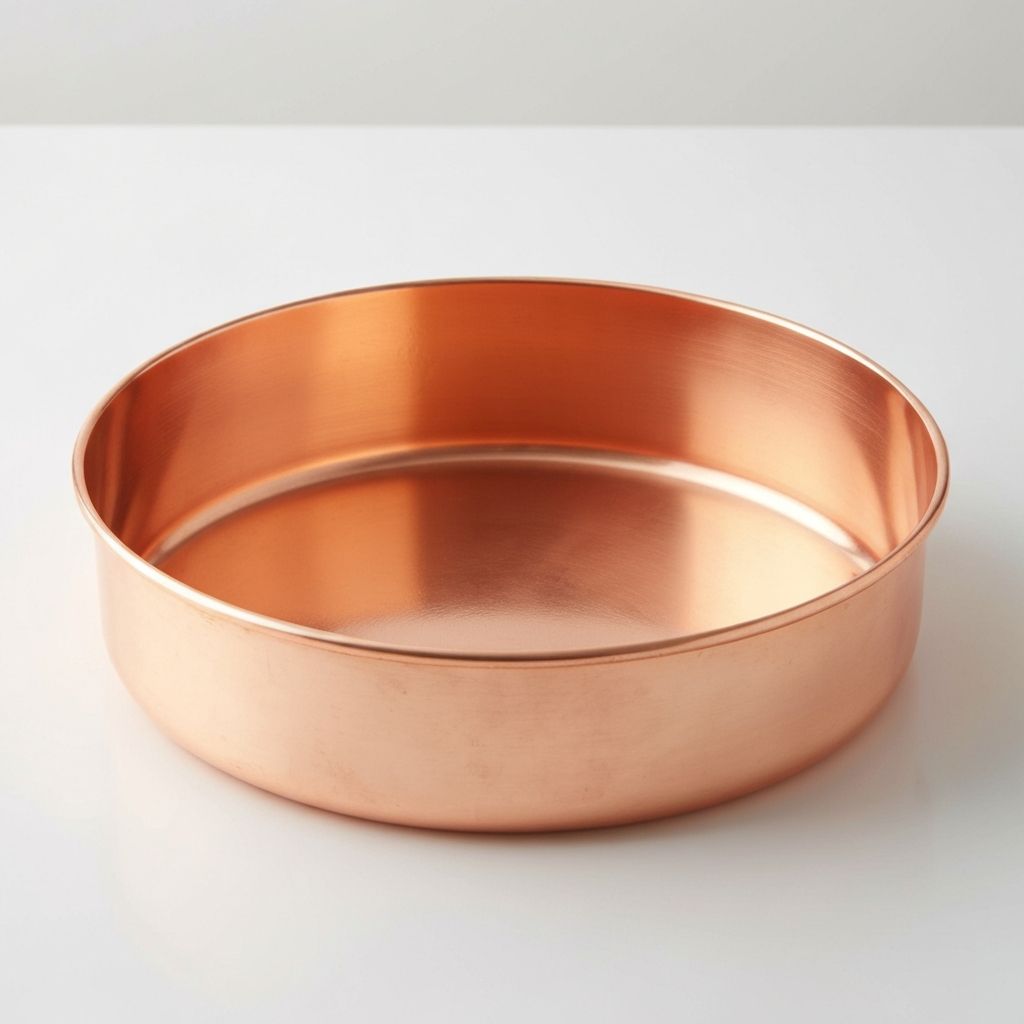
Jam / Sugar Pan
Unlined copper is essential for candy making and jam. The high heat conductivity prevents scorching while allowing rapid evaporation for perfect texture.
Best For:
Copper vs. Other Cookware Materials
Understanding the performance differences helps you make an informed decision for your kitchen. Here's how copper compares to other popular cookware materials based on scientific data.
| Material | Thermal Conductivity | Heat Response | Even Heating | Durability | Maintenance | Best For |
|---|---|---|---|---|---|---|
| CopperBest | 401 W/mK | Instant (1-2 sec) | Excellent | Lifetime+ | Moderate | Sauces, precision cooking |
| Aluminum | 237 W/mK | Fast (3-4 sec) | Good | 10-15 years | Low | Everyday cooking |
| Stainless Steel | 16 W/mK | Slow (10+ sec) | Poor (hot spots) | Lifetime | Low | Searing, browning |
| Cast Iron | 80 W/mK | Very slow (20+ sec) | Moderate | Lifetime+ | High | High heat, oven use |
Why Thermal Conductivity Matters
Thermal conductivity measures how quickly heat moves through a material. The higher the number, the faster and more evenly heat distributes across the cooking surface.
Copper's 401 W/mK rating means it conducts heat 25 times faster than stainless steel and nearly twice as fast as aluminum. This translates to:
- No hot spots - entire surface heats uniformly
- Instant control - temperature adjusts immediately
- Energy efficiency - less heat needed for same results
- Better results - consistent cooking edge to center
What Professional Chefs Say About Copper Cookware
From Michelin-starred restaurants to home kitchens, copper cookware has earned the trust of culinary professionals worldwide for its unparalleled performance.

Thomas Keller
Chef & Restaurateur
The French Laundry
"Copper cookware isn't just a tool—it's an extension of the chef's hand. The precision and control it offers is unmatched in any professional kitchen."

Julia Morgan
Executive Chef
Copper & Vine
"After 20 years of cooking professionally, I can confidently say that investing in quality copper pans was the single best decision for my culinary career."

Marco Bellini
Pastry Chef
Dolce Vita Patisserie
"For delicate sauces and precise temperature control in pastry work, nothing compares to copper. My Mauviel saucepans are irreplaceable."
How to Identify Quality Copper Cookware
Not all copper cookware is created equal. Use this comprehensive checklist to ensure you're investing in genuine, high-quality pieces that will last generations.
Green Flags
Signs of quality copper cookware worth your investment:
- Copper thickness of 2mm or more (2.5mm ideal for stovetop)
- Reputable brand with heritage (Mauviel, Falk, Ruffoni)
- Clear information about lining material (tin or stainless steel)
- Solid, riveted handles (brass, cast iron, or stainless steel)
- Weight feels substantial when held
- Even copper color without patches or thin spots
Red Flags
Warning signs that indicate poor quality or fake copper:
- Extremely low price (quality copper is never cheap)
- Copper layer less than 1.5mm thick
- Plastic handles or welded construction
- No brand information or unclear origin
- "Copper-colored" or "copper-look" in description
- Lightweight feel—real copper is heavy
Questions to Ask
Essential questions before making a purchase:
- 1What is the copper thickness in millimeters?
- 2Is the lining tin or stainless steel?
- 3Where is the cookware manufactured?
- 4Are handles riveted or welded?
- 5Does the brand offer retinning services?
- 6What is the warranty period?
Common Copper Cookware Myths—Debunked
Misinformation prevents many cooks from experiencing copper's benefits. Here's the truth behind the most common misconceptions.
"Copper cookware is too difficult to maintain"
Modern copper with stainless steel lining requires no more maintenance than regular cookware. Only the exterior needs occasional polishing—and that's optional.
Verdict: Mostly False"Copper is toxic and unsafe for cooking"
Lined copper cookware is completely safe. The tin or stainless steel interior prevents any contact between food and copper. Only unlined copper (for sugar work) requires specific precautions.
Verdict: False"Copper cookware only works on gas stoves"
While copper excels on gas, it works perfectly on electric and ceramic cooktops. Only induction requires special copper pieces with a magnetic base layer.
Verdict: Partially True"All copper cookware is the same quality"
Copper thickness, lining material, and construction quality vary dramatically. Cheap 'copper-look' cookware is just copper-plated steel with none of the thermal benefits.
Verdict: False"Copper pans last forever without care"
Tin-lined copper needs retinning every 10-20 years with heavy use. Stainless-lined copper is more durable but both benefit from proper care and storage.
Verdict: Partially True"Professional chefs don't actually use copper"
Copper is the standard in French professional kitchens and Michelin-starred restaurants worldwide. It's chosen specifically for sauces, pastry, and precision cooking.
Verdict: FalseComplete Copper Cookware Guide
Everything you need to know about choosing, using, and maintaining copper cookware for optimal performance and longevity.
Choosing Your Lining
Tin Lining: Traditional and authentic, tin provides a naturally non-stick surface that's ideal for delicate sauces and gentle cooking. Requires re-tinning every 10-20 years, which is part of the copper cookware tradition.
Stainless Steel Lining: Modern and low-maintenance, stainless offers durability and can handle high heat. Perfect for searing, browning, and everyday cooking. Requires no special maintenance beyond regular cleaning.
Silver Lining: The ultimate in thermal conductivity and antimicrobial properties. Used in ultra-premium pieces for the most discerning collectors and professional chefs.
Best Uses for Copper
Copper cookware excels at temperature-sensitive preparations: sauces (Hollandaise, beurre blanc, béarnaise), caramel and sugar work, chocolate tempering, risotto, fish and seafood, and delicate reductions.
The instant heat response prevents burning and allows you to execute advanced techniques with confidence. From French classical cuisine to modern molecular gastronomy, copper provides the precision that separates good cooking from great.
Care & Maintenance
Daily Care: Wash with warm soapy water and dry immediately. Avoid dishwashers as they can damage the copper finish. Use wooden or silicone utensils to protect tin linings.
Polishing: The natural patina adds character, but if you prefer bright copper, polish with a mixture of salt and vinegar or use commercial copper polish. Many chefs prefer the authentic aged look.
Storage: Hang your copper pieces or store with protective cloth between stacked items. Proper storage prevents scratching and maintains the exterior beauty.
Investment Value
Quality copper cookware from Mauviel, Ruffoni, or Falk represents a lifetime investment. Unlike non-stick pans that need replacement every few years, properly maintained copper lasts generations. Many families pass down copper pieces as heirlooms.
Factor in the cost per use over decades of service, and copper becomes one of the most economical choices for serious cooks. The superior cooking performance justifies the initial investment many times over.
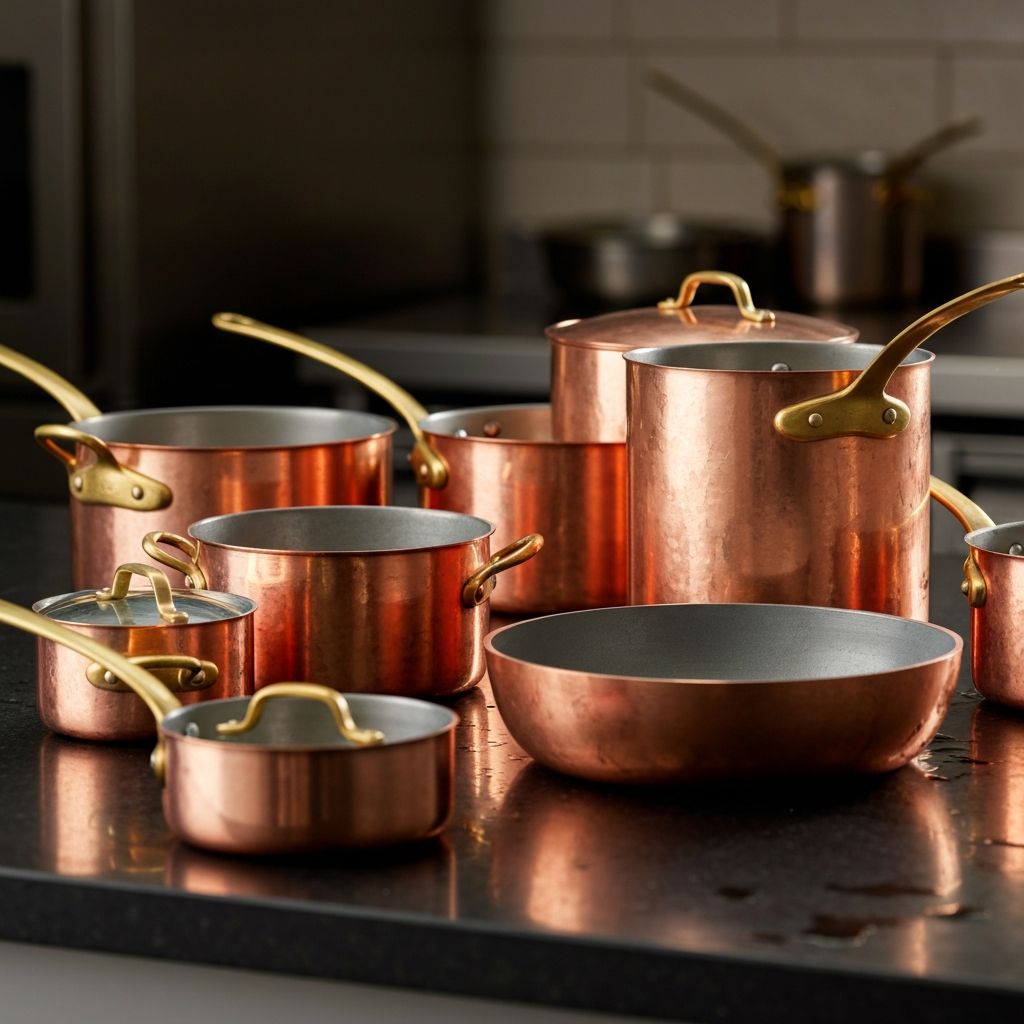
Ready to Experience the Difference?
Explore our curated selection of professional copper cookware from Europe's finest manufacturers.
View CollectionsFrequently Asked Questions
Expert answers to common questions about copper cookware in 2026. Learn everything you need to know before investing in professional copper pieces.
Get Expert Copper Cookware Tips & Deals
Join our newsletter for exclusive buying guides, care tips, seasonal recipes perfect for copper cookware, and alerts when premium brands go on sale.
No spam, unsubscribe anytime. We respect your privacy.